
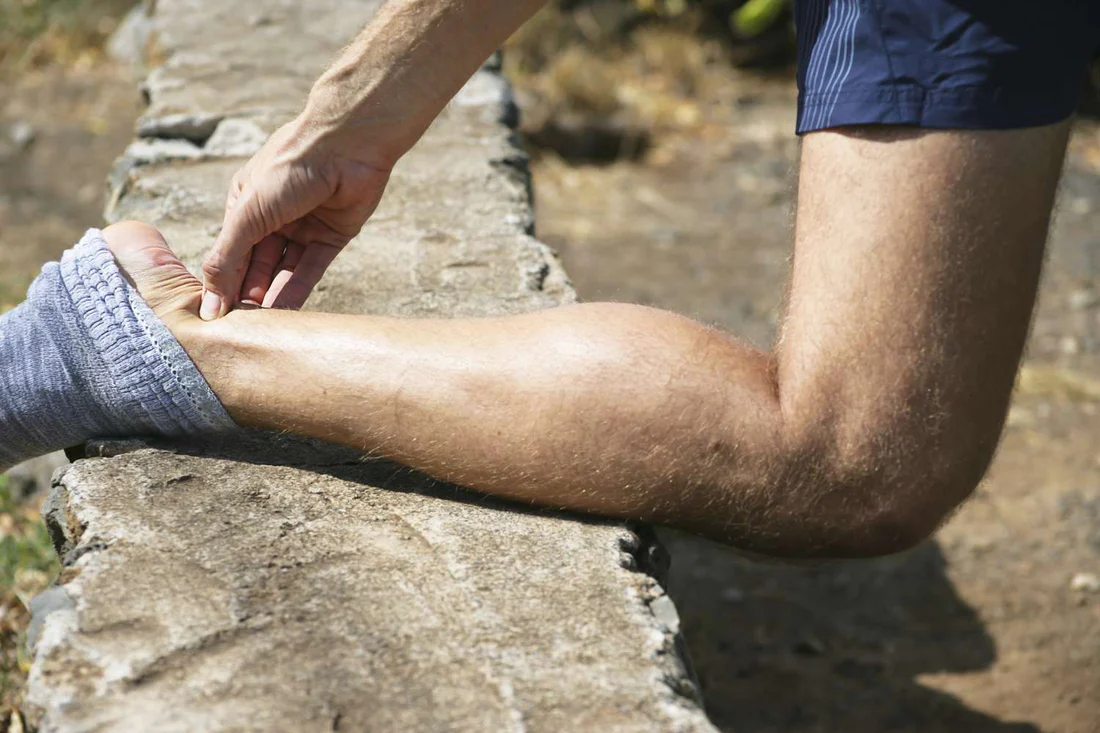
The Achilles tendon is important for almost every movement involving your lower body, from walking and running to jumping and climbing stairs. Because it endures such constant strain, it’s also one of the most commonly injured tendons in the body. Whether you’re an athlete, a weekend runner, or simply leading an active lifestyle, understanding Achilles tendon injuries and how to treat and prevent them is essential for maintaining long-term mobility and strength.
The Achilles tendon connects the heel to the calf. You use it to walk, run, and jump, so it’s constantly under pressure. Over time, this pressure can cause the tendon to become irritated or tear.
A tear in the Achilles tendon (also known as a rupture or snap) is one of the most common Achilles injuries, occurring in about 18 of every 100,000 patients. It typically occurs in men over 30 and continues to increase in patients aged 40–59 for two main reasons:
Before moving forward with treatment for any type of Achilles tendon injury, it’s important to understand why the injury occurred and how different treatment options and behavioural changes can prevent it from happening again.
Achilles tendon injuries are categorized as acute or chronic.
Acute injuries include:
Chronic injuries include:
To diagnose your injury, your doctor or physiotherapist will examine your foot and ankle, ask you to demonstrate your range of motion, and perform imaging tests to look for damage.
Achilles tendonitis is an overuse injury of the Achilles tendon, where the band of tissue connecting calf muscles to the heel becomes inflamed. Achilles tendon pain can be sudden or ongoing, often described as a throbbing, burning sensation that won’t go away.
During the initial assessment, your physiotherapist will identify the location of your pain and address swelling in the leg and ankle region. They may also ask about movements that make it worse, such as climbing stairs, walking, running, or standing on your toes.
Ice and massage therapy can help relieve swelling and loosen surrounding muscle tissue.
The initial step in treating Achilles tendonitis is to rest and follow the R.I.C.E. protocol (Rest, Ice, Compression, Elevation). Ice can help reduce swelling and alleviate pain when applied to the affected area.
Physiotherapy plays a crucial role in recovery. Under the guidance of your therapist, you will take on strengthening, flexibility, and gait dynamics work.
Exercise with your physiotherapist or in a rehab program will help your lower leg and ankle regain strength and flexibility. Although treatment for Achilles tendon problems takes time, it usually works, and most people can return to sports and daily activities.
Ruptures are often treated surgically in patients who are healthy and want to return to their former level of activity. Some studies show that surgical treatment can reduce the risk of re-rupture compared to nonsurgical care.
Minimally invasive repair allows the patient to start weight bearing sooner than traditional surgery, leading to faster recovery. Smaller incisions mean easier wound care, lower risk of scarring or infection, and shorter recovery.
Patients leave the hospital with a cast or boot the same day. After a week, a physiotherapist will examine pain levels and guide a basic exercise program.
Nonsurgical treatment is recommended for older or less active patients. It usually involves a cast or boot for four to 12 weeks, depending on severity. Ice and pain medication can be used as needed.
Once weight bearing is possible, physiotherapy begins to strengthen and stretch the tendon and surrounding muscles. In severe chronic injuries, surgery may be an option to:
Surgery is considered a last resort when conservative treatments fail.
Full recovery from an Achilles injury usually takes six to twelve months. The timeline depends on the injury type, treatment method, and personal fitness goals.
Early physiotherapy emphasizes pain management, rest, and gradual reintroduction of activity. As symptoms improve, focus shifts to flexibility, strength, and movement patterns.
Taking precautions can reduce your risk of Achilles injury:
Achilles tendon injuries, from mild tendonitis to full ruptures, require timely care and structured rehabilitation. With physiotherapy, appropriate rest, and gradual strengthening, most patients regain full mobility and return to activity.

.png)
.svg)
.svg)