

our services:

Vestibular Physiotherapy
Vancouver

Vestibular physiotherapy in Vancouver for vertigo, BPPV, dizziness, and balance problems. Clear answers and hands-on treatment at our Downtown and Fairview clinics, so you can feel steady on your feet again.

Specialized Care for Vestibular Disorders

The vestibular system, located in the inner ear and connected to the brain, controls balance, spatial orientation, and gaze stability. When this system is damaged, the results can include debilitating dizziness, vertigo, imbalance, nausea, and a negative impact on daily activities.
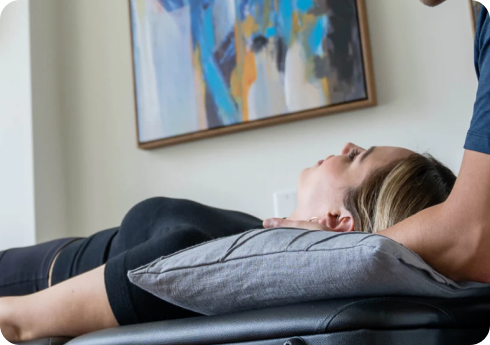
Vestibular rehabilitation at VanCity Physio uses targeted exercises and hands-on techniques to help your brain compensate, restore balance, and reduce symptoms. Our Vancouver physiotherapists are trained in vestibular assessment and treatment, and work closely with our concussion physiotherapy team when dizziness follows a head injury.
Vestibular physiotherapy addresses underlying dysfunction by retraining your brain's ability to process balance information. This approach creates lasting improvement rather than temporary relief.

Do Any of These Sound Familiar?

Dizziness feels different depending on what's causing it. These are the patterns we see most often in our Vancouver clinics, and the conditions usually behind them.

"The room spins when I roll over in bed"

Often linked to: BPPV

Short bursts of spinning when you lie down, roll over, look up, or bend forward. Usually very treatable, often in just a few sessions.

"I've been dizzy since I had a virus"

Often linked to: vestibular neuritis or labyrinthitis

Severe vertigo that came on suddenly, followed by days or weeks of feeling off balance, especially when you turn your head.

"I've felt foggy and off balance since a concussion"

Often linked to: post-concussion vestibular dysfunction

Dizziness, trouble focusing your eyes, or feeling worse in busy places after a head injury. Learn more about our concussion physiotherapy.

"I feel like I'm rocking or swaying all the time"

Often linked to: PPPD

A constant sense of unsteadiness that's worse when standing, walking, or around busy patterns like grocery store aisles and screens.

"My dizziness comes with migraines"

Often linked to: vestibular migraine

Episodes of vertigo or imbalance, with or without headache, often alongside light or motion sensitivity.

"I'm unsteady and worried about falling"

Often linked to: age-related imbalance or Meniere's disease

Feeling less sure on your feet, especially on stairs or uneven ground. Balance training and active rehabilitation help rebuild confidence.

When to get emergency care: sudden dizziness with a severe headache, double vision, trouble speaking, facial drooping, weakness or numbness, or sudden hearing loss needs urgent medical attention. Call 911 or go to your nearest emergency department.

BPPV: The Most Common Cause of Vertigo

Benign paroxysmal positional vertigo (BPPV) happens when tiny calcium crystals in your inner ear shift out of place and drift into one of the balance canals. When you move your head, the loose crystals send false signals to your brain, causing a brief but intense spinning sensation, usually lasting less than a minute. The good news: BPPV is one of the most treatable causes of dizziness.

1

Assessment

Your physiotherapist confirms BPPV and pinpoints which ear and canal are affected. The main tests are the Dix-Hallpike test, where you move from sitting to lying with your head turned, and the supine roll test, where your head is turned side to side while lying down. We watch your eye movements during each position, since the pattern tells us exactly where the crystals are.

2

Repositioning

Once we know the affected canal, we guide your head and body through a series of positions to move the crystals back where they belong. The Epley manoeuvre is used for the most common type, and the Semont, BBQ roll, or Gufoni manoeuvres are used for other canals. Each position is held briefly, and you may feel dizzy during the process.

3

Follow up

Many people feel a big improvement right away, and BPPV typically resolves within 1 to 3 sessions. You may feel slightly off balance for a day or two afterwards. We retest at your next visit, and if any unsteadiness remains, add balance exercises to help you fully recover.

Why not just try the Epley at home?

Home videos assume you have the most common type of BPPV in a particular ear. If the crystals are in a different canal, or the dizziness has another cause, the wrong manoeuvre won't help and can leave you feeling worse. A proper assessment makes sure you get the right treatment the first time, and we'll teach you what to watch for if BPPV ever comes back.

Comprehensive Vestibular Physiotherapy Assessment

Your initial evaluation includes:

Detailed symptom history

  • Onset and triggers
  • Description of dizziness (spinning, lightheadedness, imbalance)
  • Duration and frequency of episodes
  • Associated symptoms (nausea, hearing changes, headaches)
  • Impact on daily function

Vestibular function testing

  • Head impulse test (assesses vestibular-ocular reflex)
  • Gaze stability assessment
  • Positional testing for BPPV
  • Vestibular-ocular reflex
  • Post-head-shake testing

Sensation during treatment

  • Static balance
  • Dynamic balance (tandem walking, single-leg stance)
  • Functional balance scales
  • Fall risk assessment

Cervical spine examination

Neck dysfunction often coexists with vestibular disorders and can contribute to dizziness.

Visual system assessment

Evaluating eye movement control and visual dependence, which affect balance.This comprehensive assessment identifies the specific vestibular pathology and guides treatment selection.

What to Expect During Treatment

Initial sessions

Expect to feel worse temporarily. Vestibular exercises intentionally provoke symptoms to promote adaptation. This is normal and necessary. Symptoms typically subside within 30-60 minutes after exercise.

Progression

As your brain adapts, exercises that initially caused significant symptoms will become tolerable. This indicates successful compensation. Your physiotherapist will advance exercises to maintain appropriate challenge.

Realistic expectations

Complete symptom resolution isn't always achievable for chronic conditions, but significant functional improvement is. The goal is managing symptoms well enough to resume valued activities.

Preparing for Your Assessment

What to bring
  • List of medications (some medications affect balance or vestibular function)
  • Symptom diary if you've been tracking
  • Results from any vestibular testing (VNG, rotary chair, VEMP)
  • Audiology reports if available
  • Imaging results (MRI, CT) if relevant
What to expect
  • Wear comfortable clothing suitable for movement
  • Assessment will include position changes that may provoke symptoms
  • Bring someone to drive you home if you're concerned about symptom provocation
  • Plan for 60-minute initial assessment
What to bring
  • Detailed symptom description
  • Activities that trigger or worsen symptoms
  • Previous treatments and their effects
  • Impact on daily activities and quality of life

Preparing for Your Sports Physiotherapy Assessment

Normal responses

  • Increased dizziness or imbalance for 30-60 minutes
  • Mild nausea
  • Fatigue (vestibular exercises are neurologically demanding)
  • Slight headache

These symptoms should gradually resolve. If they persist beyond a few hours or worsen significantly, contact your physiotherapist.

Self-care

  • Rest as needed after sessions
  • Stay well hydrated
  • Continue prescribed home exercises despite temporary discomfort
  • Track symptoms to identify patterns

Between sessions

  • Perform home exercises consistently
  • Gradually expose yourself to activities that trigger mild symptoms
  • Avoid complete avoidance of movement (this perpetuates dysfunction)
  • Email your physiotherapist with questions or concerns

Home Exercise Program Requirements

Vestibular rehabilitation success depends on home exercise adherence. You'll receive:

  • Written exercise instructions
  • Video demonstrations via Physitrack
  • Symptom tracking logs
  • Clear progression criteria

Your physiotherapist monitors your home program adherence and adjusts exercises based on your progress and tolerance.

Vestibular Physiotherapy Treatment Investment

Vestibular physiotherapy is billed as clinical physiotherapy. To book, select "Clinical Physiotherapy" from our online platform.

All assessment, manual treatments (including BPPV repositioning), and exercise prescription are included in session fees.

Most extended health plans cover vestibular physiotherapy. Direct billing available.

Typical treatment course:

  • BPPV: 1-3 sessions
  • Other vestibular conditions: 6-12 sessions over 8-16 weeks
  • Check-ins every 4-6 weeks after initial intensive phase

Vestibular Physiotherapy at Two Vancouver Clinics

Book at whichever clinic is easier to reach. If your dizziness is strong, consider having someone drive you to your first appointment.

Downtown Vancouver

Unit 508, 1160 Burrard Street
Near St. Paul's Hospital, an easy walk from the West End and Yaletown.

Book Downtown

Fairview

Unit 201, 1416 West 8th Avenue
A block off Broadway, convenient for Kitsilano, South Granville, and Mount Pleasant.

Book Fairview
testimonials

Results that speak for themselves

Vestibular Physiotherapy Vancouver: Patient Success Stories
I wanted to take a moment to write you a note of gratitude for your time and efforts during my recovery.

Your attitude, depth of knowledge, and commitment really helped me through one of the roughest times in my life.
— M. Goddard
VanCity Physio has played a pivotal role in my journey to healing my back after a car accident in 2017. Their positive attitude and ability to build instant rapport with each of his clients constantly amazes me.

Their dedication to solving the mystery behind my injury and constant support in advocating for my health has been a necessary component to the success I've had treating this injury.

I trust VanCity Physio fully with this injury and I will undoubtedly be visiting any time I need to see a physiotherapist in the future. Do yourself a favour and book in now!
— Dr. Neda R

Frequently Asked Questions About Vestibular Physiotherapy in Vancouver

What is vestibular physiotherapy?

Vestibular physiotherapy is a specialized type of physiotherapy for dizziness, vertigo, and balance problems caused by the inner ear or the way your brain processes balance information. Treatment combines hands-on techniques, like repositioning for BPPV, with targeted exercises that retrain your balance system.

Can physiotherapy help vertigo?

Yes. Physiotherapy is a first-line treatment for many types of vertigo. BPPV, the most common cause, often resolves in 1 to 3 sessions with repositioning. Other conditions, such as vestibular neuritis or post-concussion dizziness, improve with a structured exercise program over several weeks.

What is BPPV and how is it treated?

BPPV (benign paroxysmal positional vertigo) happens when small calcium crystals in the inner ear move into one of the balance canals, causing brief spinning when you change head position. Your physiotherapist identifies the affected ear and canal with positional tests, then uses a repositioning manoeuvre to guide the crystals back into place.

What is the Epley manoeuvre?

The Epley manoeuvre is a series of head and body positions used to treat the most common type of BPPV. Each position moves the loose crystals step by step out of the balance canal. It works best when a physiotherapist first confirms which ear and canal are affected, since other types of BPPV need different manoeuvres.

How many vestibular physiotherapy sessions will I need?

BPPV typically needs 1 to 3 sessions. Other vestibular conditions usually take 6 to 12 sessions over 8 to 16 weeks, with check-ins every 4 to 6 weeks once you're progressing well. Your physiotherapist will outline a plan after your 60 minute initial assessment.

Will vestibular exercises make my dizziness worse?

At first, they may, briefly. Vestibular exercises gently provoke symptoms so your brain can adapt, and mild dizziness for 30 to 60 minutes afterwards is normal. As your balance system recovers, the same exercises become easier. Contact your physiotherapist if symptoms last more than a few hours or get significantly worse.

When should I see a doctor instead of a physiotherapist for dizziness?

Get emergency care right away if dizziness comes on suddenly with a severe headache, double vision, trouble speaking, facial drooping, weakness, numbness, or sudden hearing loss. For ongoing or recurring dizziness without these warning signs, a vestibular physiotherapy assessment is a good place to start, and we'll refer you to your doctor if anything needs further investigation.

Do I need a referral, and is vestibular physiotherapy covered?

No referral is needed to book. Vestibular physiotherapy is billed as physiotherapy, so most extended health plans cover it under physiotherapy benefits, though some plans require a doctor's referral for reimbursement. VanCity Physio offers direct billing for eligible plans at our Downtown and Fairview clinics.