
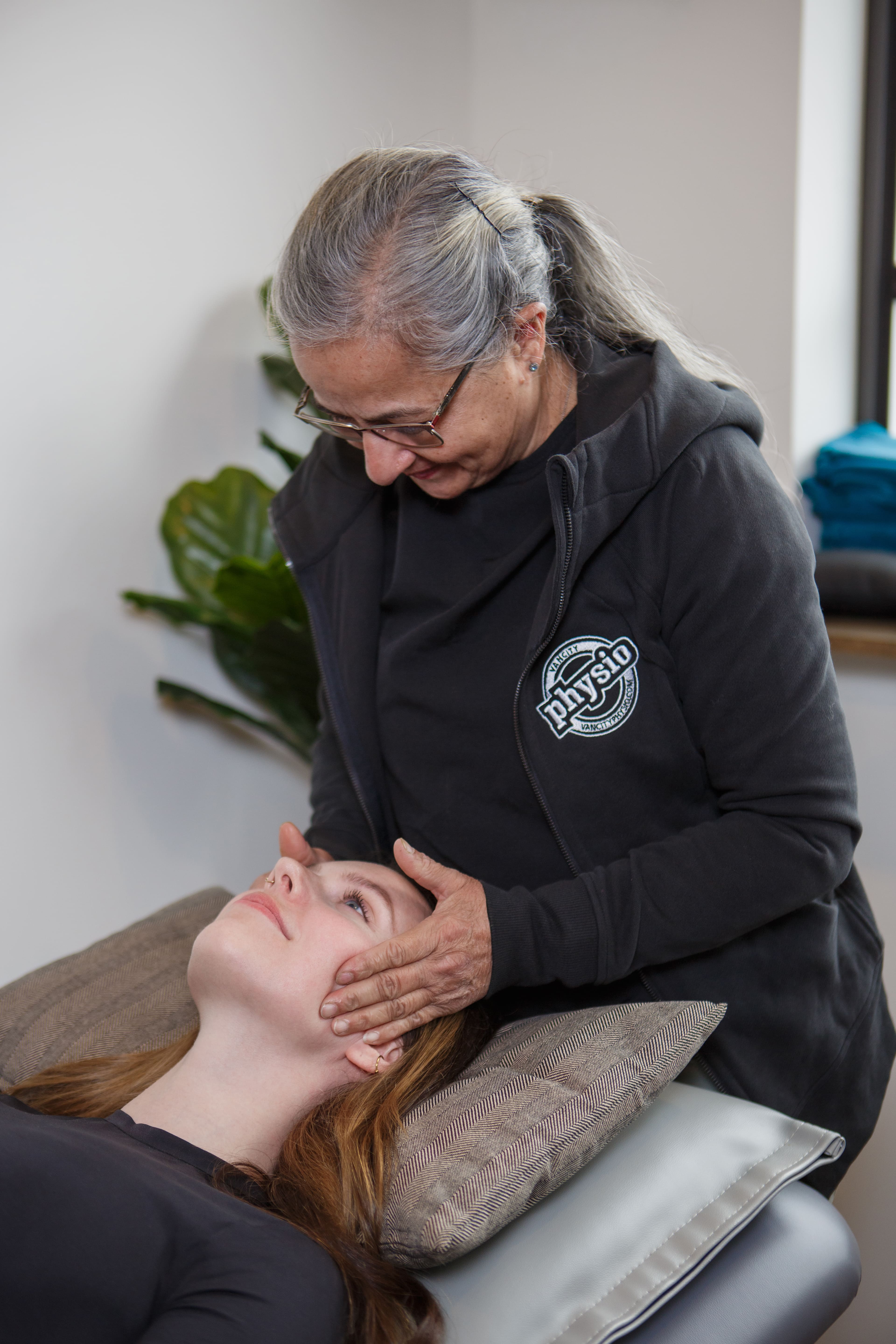
If you live with temporomandibular joint (TMJ) problems, finding relief can feel like trial and error. Many people try night guards, dental splints, chiropractic care or a surgical consultation, and still find that the jaw pain, clicking or tension comes back.
When TMJ pain won't go away, it often means one part of the problem is being treated while other contributors are still active. The jaw rarely works alone. Neck posture, muscle tension and habits such as clenching can all keep symptoms going.
That was the situation for Mr. S, who came to our Downtown Vancouver clinic after searching for a lasting answer to his chronic TMJ issues. Here is how TMJ physiotherapy looks at the whole system, and why that can help when other approaches haven't been enough on their own.
The jaw is one of the most complex joint systems in the body. It depends on smooth joint mechanics, coordinated muscle activity and the position of the head and neck.
Each type of care plays a useful role. A dentist-fitted night guard, for example, protects teeth from grinding. But a guard on its own may not change why the jaw muscles are overactive in the first place. If muscle tension, neck stiffness or movement habits are also contributing, symptoms can return once treatment stops.
Common contributors to persistent TMJ symptoms include:
That is why a thorough assessment looks beyond the jaw joint itself.
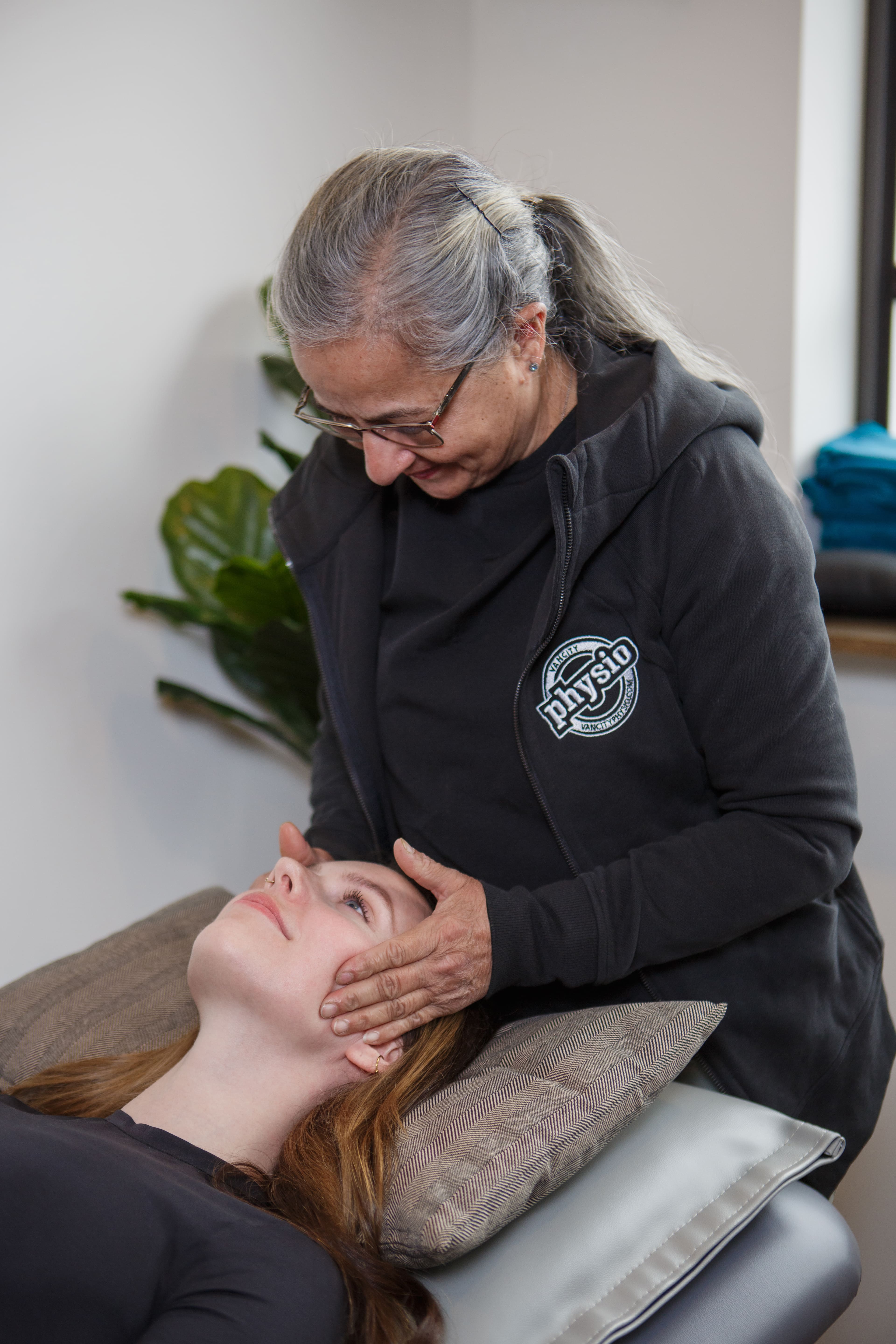
When Senior Physiotherapist Ranko Vukovic assesses a complex TMJ case, he treats the jaw as part of a connected system. The assessment typically looks at how the jaw opens and closes, which muscles are tender or overactive, and how the neck and upper back move.
Depending on what the assessment finds, a TMJ treatment plan may include:
Manual therapy inside and outside the mouth. Hands-on manual therapy can help relax tight jaw muscles, such as the masseter and pterygoids, and improve how the joint moves.
Jaw exercises and habit retraining. Specific exercises help restore controlled, comfortable movement. Your physiotherapist can also help you notice and reduce clenching during the day.
Neck and upper back treatment. Improving mobility and posture in the neck and upper back can reduce strain on the jaw.
Additional modalities, where appropriate. For some patients, tools such as shockwave therapy or High-Energy Inductive Therapy (HeIT) may be added to help manage pain and muscle tension. Research on these tools for jaw pain is still developing, so they are used as part of a broader plan rather than on their own.
Physiotherapy also works well alongside dental care. If you already use a night guard, your physiotherapist can help address the muscle and movement side of the problem while your dentist manages the teeth.
Mr. S had already tried several other approaches before booking with Ranko. Instead of focusing only on where it hurt, his assessment looked at how his jaw, neck and surrounding muscles were working together.
After two appointments, he shared his experience in a Google review:
Every jaw is different, and recovery times vary. What matters is a plan built around what is actually driving your symptoms.
Consider booking an assessment if you have:
Seek prompt medical or dental care if your jaw locks and you cannot open or close your mouth, if pain follows a fall or blow to the face, or if you notice swelling, fever, numbness or changes to your bite that came on suddenly. These need to be checked before starting physiotherapy.
Why won't my TMJ pain go away?
Persistent TMJ pain often has more than one contributor, such as overactive jaw muscles, clenching, neck stiffness or posture. If only one of these is addressed, symptoms can return. An assessment that looks at the whole system helps identify what is keeping the pain going.
Can physiotherapy help TMJ?
Yes. Physiotherapy for TMJ can include manual therapy, jaw exercises, habit retraining and treatment for the neck and upper back. The right combination depends on your assessment findings.
Should I stop wearing my night guard if I start physiotherapy?
Not without talking to your dentist. A night guard and physiotherapy address different parts of the problem and often work well together.
How much does TMJ physiotherapy cost at VanCity Physio?
TMJ physiotherapy sessions are 30 minutes and cost $140 for both initial and follow-up visits, according to our published price list.
Do I need a referral to see a physiotherapist in Vancouver?
No referral is required in British Columbia. VanCity Physio also offers direct billing to most extended health plans, including ICBC and WorkSafeBC.
If clicking, locking or jaw pain keeps coming back, you don't have to keep cycling through short-term fixes. A thorough assessment can show what is driving your symptoms and give you a clear plan.
Book a TMJ physiotherapy assessment at our Downtown clinic on Burrard Street, or contact us with any questions.


